
High-Volume Patient–Caregiver Interactions in a Fully Digital Obesity Care Model
Digital obesity care enables high levels of patient–caregiver interaction and sustained engagement in treatment, with higher retention than in other settings, potentially supporting longterm outcomes.
Across three years, messages exchanged, weight entries logged and retention in treatment was quantified for more than 50,000 patients.
%20(1).webp)
.webp)
.webp)
.svg)
High-Volume Patient–Caregiver Interactions in a Fully Digital Obesity Care Model
Felix Wittström1, David Buchebner1, Elin Skoglund1, Oleg Ivanytskyi1, Oliver Willacy1, Kristofer Ringner1, Anna Sommerfeld1, Martin Carlsson1,2
1. Yazen Health AB, Malmö, Sweden
2. Department of Medicine and Optometry, eHealth Institute, Linnaeus University, Kalmar, Sweden
INTRODUCTION
In conventional healthcare settings, a substantial proportion of patients discontinue GLP-1 or GLP-1/GIP agonist therapy within the first year of treatment1-3. Contributing factors may include limited access to caregivers, restricted appointment availability, and insufficient support for sideeffect management. Digital obesity care models have the potential to overcome these limitations by enabling continuous patient engagement and on-demand support. We evaluated the scale of patient–caregiver interactions within a fully digital obesity care program offering unlimited follow-up.
METHODS
We quantified all messages exchanged between patients and multidisciplinary caregivers (physicians, health coaches, dietitians, psychologists, and physiotherapists) via Yazen’s digital platform. Data were collected weekly from January 1st, 2023, to December 31st, 2025 (157 weeks). Additionally, we assessed the frequency of patient-reported weight entries over the observation period and calculated the proportion of patients remaining in treatment at 12, 24, and 36 months.
RESULTS
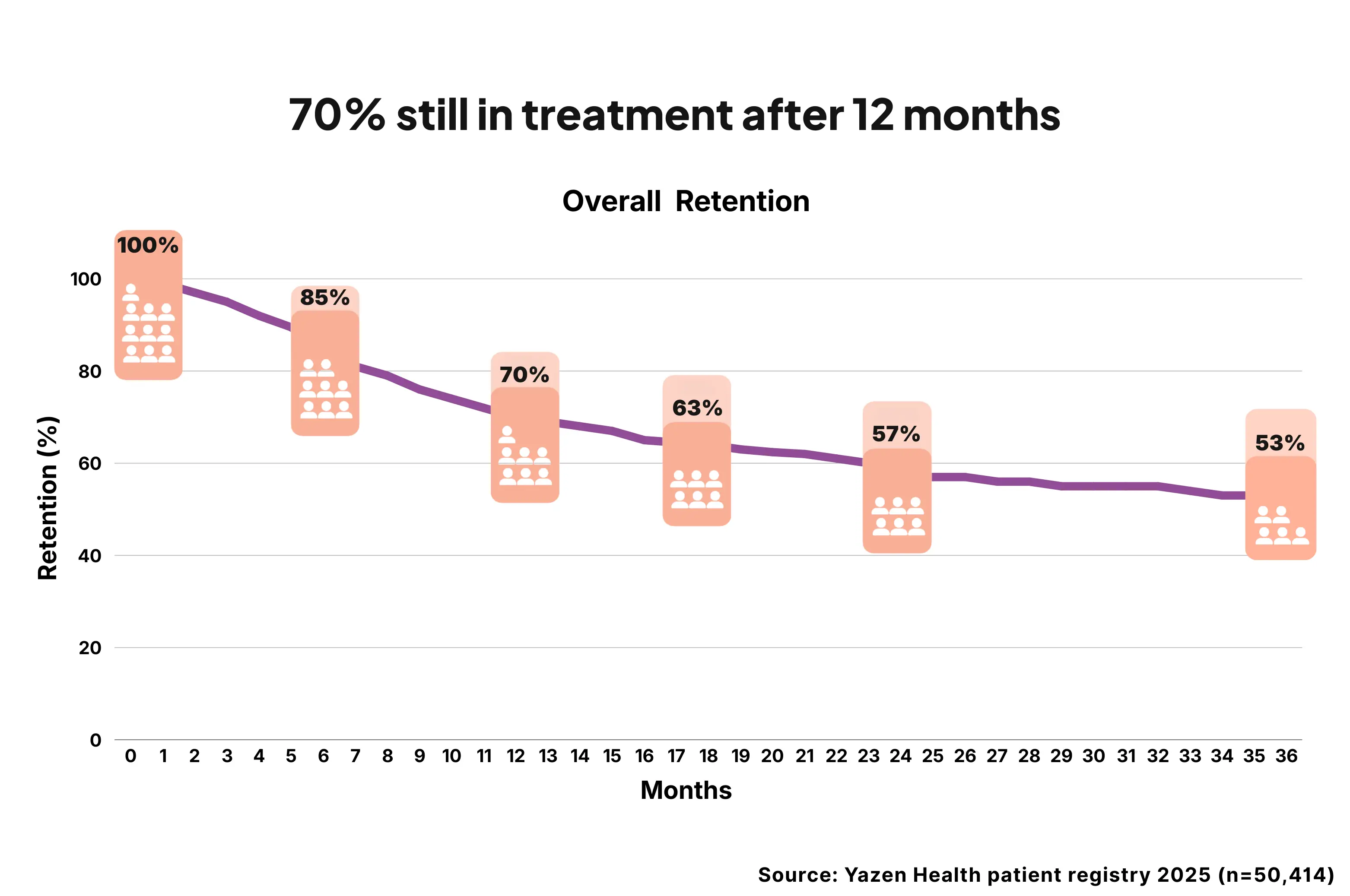
Across three full years, 7.7 million messages were exchanged between 50.414 patients and a multidisciplinary care team (mean 4.6 per patient per week). Patients logged their weight 2.3 million times, corresponding to a mean of 1 time per patient per week. The proportion of patients still in treatment remained high throughout the study period, with 70% of patients still in the service after 12 months and 53% at 36 months.
CONCLUSIONS
A fully digital obesity care model enables exceptionally high levels of patient–caregiver communication, far exceeding what is feasible in traditional in-person care. When continuous access to professional support is available, patients engage frequently and proactively, highlighting the advantages of digital platforms for long-term obesity management and GLP-1– based therapy support.
Conflict of Interest: Martin Carlsson is a co-founder and employee of Yazen Health. All other authors are employees of Yazen Health.
Funding: There were no external funding sources for the current study.
References:
- Xie et al. 2026. Glucagon-Like Peptide-1 Receptor Agonist Switching and Treatment Persistence in Adults Without Diabetes. JAMA Netw Open. 9(3):e261272
- Gleason et al. 2024. Real-world persistence and adherence to glucagon-like peptide-1 receptor agonists among obese commercially insured adults without diabetes. J Manag Care Spec Pharm. 30(8):860–867
- Rodriguez et al. 2024. Semaglutide vs Tirzepatide for Weight Loss in Adults With Overweight or Obesity. JAMA Intern Med. 184(9):1056–1064. doi:10.1001/jamainternmed.2024.2525
This abstract was presented as an oral presentation on the Nordic Obesity Meeting in Stockholm, NOM 2026. For contact email felix@yazen.com
Follow Yazen on LinkedIn for the latest Scientific Updates and News in the Obesity area!


February 2, 2026
May 19, 2026
Start your weight loss journey with Yazen today
Everything you need to do is to create an account and answer some questions about your health
.svg)
.svg)
More articles

Examining the effectiveness of a new digital care model on weight loss for people living with obesity
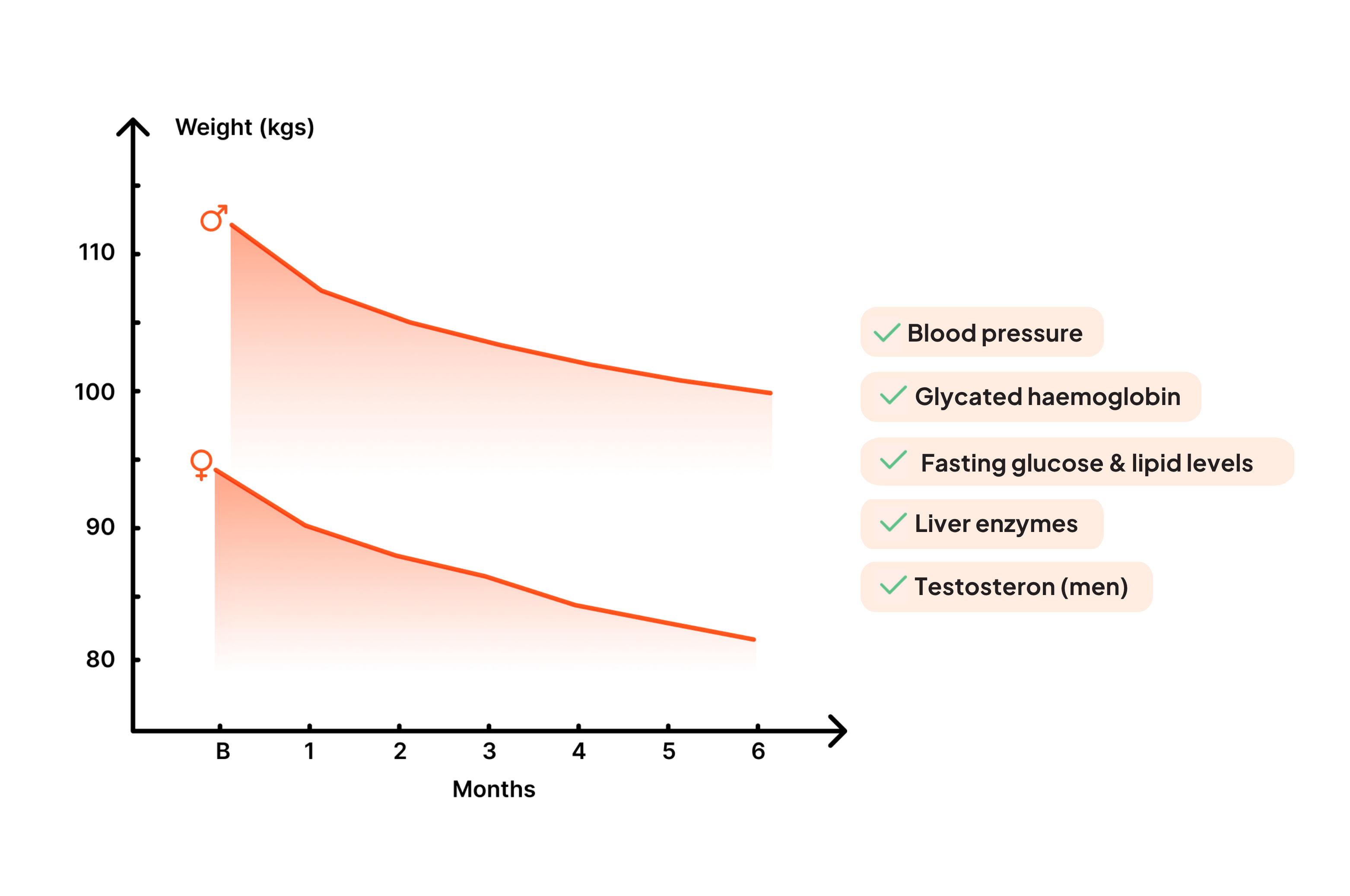
This real-world evaluation of more than 2,600 patients in Sweden showed that Yazen’s comprehensive digital obesity care model achieved 12.6% weight loss after 6 months, alongside significant improvements in cardiometabolic health markers. The model combines GLP-1 treatment, lifestyle intervention, and continuous multidisciplinary support through a digital platform designed for long-term obesity care.

Rethinking Obesity Care Through a Comprehensive Digital Model
The Yazen model integrates medical treatment, behavioural support, education, and social engagement into one continuous digital care pathway. By combining multidisciplinary expertise with high accessibility and ongoing patient interaction, the model aims to support sustainable obesity treatment and long-term health improvement.
.webp)